


From Sunburned to Spectacular: How to Resurrect Your Texas Lawn After a Brutal Summer

Happy Sunday, Texas! Now that we are officially into late September, we can all finally take a breath of cooler air. This summer in Houston, Dallas, and Austin was an absolute gauntlet. Between record-breaking stretches of triple-digit heat, unrelenting dry spells, and those unpredictable storms that just wanted to bake the soil, our lawns are looking like they’ve gone 12 rounds in a boxing ring.
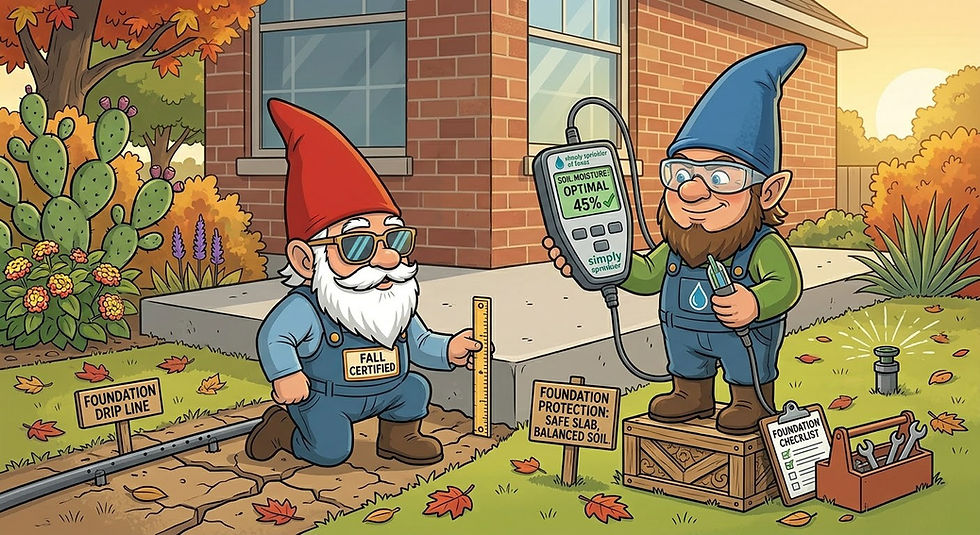
If your yard is currently sporting that lovely "patchy, faded straw" look, don't panic. Warm-season grasses like Bermuda and Zoysia are incredibly resilient, and even St. Augustine has a fighting chance if we act now. At Simply Sprinkler of Texas, our team (and yes, our dedicated gnomes!) are busy helping homeowners kickstart their autumn recovery.
If you’re ready to bring your yard back to life before winter dormancy hits, here is your essential post-summer triage plan.
Step 1: Diagnose the Damage (Is It Dormant, or Is It Dead?)
First, let's figure out what we’re dealing with. Much of your brown grass isn't actually dead it’s just dormant, a natural self-defense mechanism to protect the roots from the summer heat.
The Tug Test: Grab a handful of brown grass and give it a gentle tug. If it resists and the roots hold firm, it's dormant and will recover. If it pulls up effortlessly like loose carpet, it may have succumbed to extreme drought, grubs, or fungal take-all patch.
Spot the Spies: Look closely for pests like chinch bugs or grubs, which love to prey on heat-weakened turf.
Step 2: Breathe Life into Compacted Clay (Aeration is Key!)
Summer heat acts like a kiln, baking Texas clay into a concrete-like barrier. When soil is this compacted, water, oxygen, and nutrients can’t reach the roots; they just pool or run off.
Core Aeration: This is the single best thing you can do for a post-summer lawn. By pulling up small plugs of soil, we break up the compaction so your grass can finally breathe and absorb what it needs.
Gnome Tip: Always water your lawn lightly the day before aerating to help the aerator pull deeper, more effective soil plugs!
Step 3: Shift Your Irrigation (Deep & Infrequent)
Now that daytime temperatures are dropping, your lawn’s watering needs have completely changed. If you keep watering on your high-summer schedule, you’re just begging for fungal outbreaks like Brown Patch.
The Transition: Gradually adjust your smart controller to water deeply but less frequently. Instead of quick, daily spritzes, aim for fewer, longer watering sessions that encourage roots to search deep into the soil.
Run a System Audit: Check for summer battle scars. Mower blades, shifting clay, and heat can clog nozzles, misalign spray heads, and crack underground lines.
Step 4: Time Your Fertilization (Don't Rush!)
It’s tempting to throw down heavy nitrogen fertilizer to force a rapid green-up, but patience is a virtue here.
Let your lawn show signs of active recovery first. Apply an organic or slow-release fertilizer to gently rebuild root strength and carbohydrate reserves without forcing weak, rapid top growth right before winter freezes.
Keep an eye out for winter weeds. Once soil temperatures start dipping toward 70^\circ\text{F}, it will be time to apply a pre-emergent—but make sure your irrigation is dialed in first so it can wash properly into the root zone without washing away.
Give Your Lawn the Ultimate Comeback Check-Up
Your lawn has survived a brutal Texas summer, but it needs a little help to guarantee it stays healthy through the winter and returns stronger next spring. Let Simply Sprinkler of Texas handle the heavy lifting. We’ll perform a complete irrigation audit, adjust your seasonal schedules, and help get your soil back on track.

Comments